Friday, April 2, 2010

New Breed On The Block: Young trapos in local politics?

I would like to write about local politics today. I would have preferred to discuss national politics again but my interest has shifted dramatically towards the micro-level aspect of the entire political spectrum. I remember what my feisty professor on local government would always say: all politics is local. And there is absolutely a ring of truth about this observation. Certainly, national officials, particularly the incumbents who seek re-election, draw enormous strength from their wards and errand boys in the local level. This is where political parties play an important role for any national candidate during elections, at least ideally. But culled from the premise that all politics is local, are we to say that most local officials or candidates too have little regard for party principles? Conversely, I would like to believe that the deterioration of principled politics in the national level is but a mirror of what is really happening in the parochial arena. It is really of no moment even if you have elected the best presidential candidate come 2010 if in the end, you have just filled the city hall with the worst possible incompetent candidates for public office. I mean let us be realistic in all this. If you happen to be a gullible person and you picture the next president as someone who is omniscient, omnipotent and omnipresent, well you are in for a disappointment. The next president, even with the best possible technocrats and advisers in his cabinet, can only do so much during his term of office. To be able to solve all the deeply-rooted problems in our country necessitates more than just a great chief executive but it also entails a strong and stable foundation of the entire structure. At the end of the day, the progress of your respective hometowns will have to depend with the kind of local officials you have elected and your devout participation in the community. What I am trying to say here is plain and simple: political reforms must come first from the bottom and not on top of the political structure as pundits would like to suggest. Put bluntly, elect principled leaders in the foundational level, which is the local government then translate it up to the national tiers of the political structure.

I understand that as a rule, ethics and politics can never be merged into one. As long as the key players of Philippine politics continue to dominate the game, we can never expect legitimate reforms and genuine transformations for our country. Change must come from the outside not from within the old system. I shall propose the term “outside” to mean the youth sector of society. Indeed, this observation affirms the age-old saying that it is hard to teach old dogs with new tricks. This is especially true if we rely on traditional politicians to make meaningful reforms in the political system I am therefore deeply convinced that the youth can introduce new kind of politics within our corrupted system of government and it is in them I can foresee the reinvigoration of party principles as a democratic way of life. For one, unlike the old-timers of the present political system, the youth sector is not yet a prey to cynical thoughts. They possess purity of principles that will stand the test of solidity amidst the recurring political turmoil in our country. I have put so much faith in the youth of my generation to shoulder the burden and help educate the masses in terms of political education. Or better yet join the political mainstream and gradually infuse youthful idealism to counter the gargantuan tide of corruption and ineptitude that thrive incessantly in the halls of public offices.

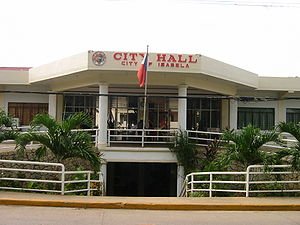
The question therefore now is: how best can we determine who amongst the local candidates has what it takes to bear with the constitutional declaration that “Public office is a public trust?” I think the most decisive starting point here is for the voter to look into the candidate’s character. Verily, when I speak of character, the same should not be limited to the examination of a candidate’s public character but private as well. Necessarily, a leader must be whole. He cannot have his public character be honest but on the other hand, have his private character be deceitful and corrupt. The core ethical values like respect, honesty, and the will to distinguish right and wrong amidst over-powering temptations inherent in public office are all ingredients of a great leader. I would like to think, and as I propose in this writing, that young candidates possess the much needed character for public office. This however does not mean that all young candidates running for public office are character-proof. In fact in my hometown Isabela City (Province of Basilan) where politics is as devious as the devil, the reverse is more likely the rule. It saddens me to know that even young candidates, people I grew up with, have not lived up to the expectations of what youthful idealism should be. Albeit there are indications of immense political awareness from the youth sector these days, thanks to the Internet by the way, the political vigor and exuberance inherent in them have not been translated locally. Sadly, the local scene still remains pretty much the same. Most young candidates have nothing but well-sounding surnames, wealth and porma as part of their credentials. Visit their Facebook accounts and see for yourself how they visualize themselves as the next Philippine president when the office they seek to land on is simply that of a city councilor. I have at least one encounter with a pompous young candidate from my hometown who postures himself as the pag-asa ng kabataan. And since he flaunted his candidacy for city council in Facebook, I could not help but asked him some relevant questions about platforms and his ideas on local statecraft. To my dismay, he simply shrugged off the questions and boasted instead his supposed achievements as a young philanthropist in terms of humanitarian and civic projects. What was he thinking? Organizing party events, sponsoring a basketball team, and sitting as a judge for a gay pageant makes him qualified to be a city councilor? Is there a reasonable connection between his purported generosity and the functions of a city councilor under the present Local Government Code? Or is he posturing as gay rights advocate once elected in the city council? Let me remind him as early as now that the august office he wishes to serve is a seat of deliberations. Questions involving his views on individual liberty and the basics of government are not misplaced because as a future local legislator he will encounter these concepts in drafting ordinances. It is best, by way of preparation, that he should browse once in a while the provisions of the Local Government Code and the 1987 Constitution for enlightenment. He could have earned my respect had his sudden itch for generosity came long before the local elections but the timing is really off and the motive is highly suspicious.

Let me integrate the term “character” with party loyalty for it is here where a young candidate either manifest signs of conviction as a future leader or the tendency to emerge as a sure-fire traditional politician someday. In my writings, I have always been critical with the multi-party system as structured under the 1987 Constitution. From the democratic vantage point, apart from the fact that it is incompatible with a presidential system, such mechanism has greatly contributed to the demise of principled politics in our country. Worse, down in the local level, political dynasties continue to gain sturdy support from their constituents who are immensely benefited by patronage politics. As a result, political families have effectively replaced political parties as key institutions in the democratic polity. Again I wish to remind the readers that political parties are essential components of a functioning democracy. Without a strong party system and in the absence of political watchdogs like the academe, we can never expect political maturity from the people especially the masses. And following the bottom-up approach I mentioned earlier, it seems that the light at the end of the tunnel remains long in sight. To be sure this is not to say that under our present system there are no respectable political parties to count on during elections. In fact, despite my own misgivings on Senator Noy Aquino running as president, I have always respected the Liberal Party for having strong and reform-oriented programs of government. But because of the multi-party system and not to mention the party-list system, political parties in our country can hardly be seen as a reliable institution to bank on in terms of principled politics. Thus, elections in this country whether national or local elections, are personality-based contest rather than an issue-oriented democratic exercise.

It is therefore an imperative for the young candidates especially in local politics to understand the rudiments of the entire system so that they may be able to assess how to effectively infuse “youthful” reforms in government. Local statecraft entails more than just noble ideals or intentions but more importantly how to implement it as well. In other words, candidates must both possess pristine motives to serve the people better and a firm grasp on the basic mechanics of government. This two should always compliment each other. It is best then to join a well-entrenched political party composed of men and women with impeccable reputation and with a solid track-record on governance. However, if you find these political parties too “political” in the sense that the people who composed it are so ruthless to hold the reins of government then by all means take the road less traveled and run as an independent candidate. And stay independent at all times. It is unfortunate that in my beloved hometown some of our young candidates for local positions seem to show early signs of political opportunism if not arrogance. As I said it is fairly within the judgment of a candidate whether to join a political party or not. But to play safe and engage in double-talk do not speak much of a promising leader coming from the ranks of the youth sector. Take this young local aspirant for example, while pledging his undying loyalty and commitment to his party he also secretly supports the ruling dynasty. Rumor has it though that this young aspirant was recently fired from the party not because of disloyalty but due to fluctuating childish behavior during sorties. Some I presume opted to run as independent candidates because they feel that most political parties do not have definite programs of government other than motherhood statements. If you are neophyte, or a perennial loser and you happen to run as an independent candidate I must say that I praise your courage not to join the circus despite the odds of running without a racehorse. However there are also those who, young as they are, have already mustered the art of cunningness at this early point of their political careers. These young vultures either run under the banner of a well organized political party or run as independent candidates but nonetheless joined the bandwagon as guest candidates. There can be no logical reason for this tactic other than wanting to play both cards safely. But surely, I don’t see any principled politics here let alone the makings of a great youth leader. In times of never-ending crises, a potential leader must always takes sides on issues that define convictions no matter what the political consequences are. There is no middle-ground in the face of a power-hungry administration, either join the opposition or stay truly independent. We have had enough of these fence-sitting trapos in the halls of government. To run as an independent candidate while at the same time appearing as a guest candidate of a potent political party will certainly mislead the voters. I challenge these young candidates who are “semi-independents” if not binabae, to bolt out from these parties as guest candidates and once and for all make a firm stand on issues that will help the voters decide intelligently. These reasons make me very skeptic to take our chances on these young politicians.

After all what has been said, the bottom line is: taking the big leap towards change and reform in our government, starts in our hands, the youth. While traditional politics may have robbed some of these youth candidates/aspirants of the innocence and pristine motives, the voting youth has a duty to ground them back to where they should be. The malfunctions in our political system while largely attributed to the players of the system, we too are partly responsible for its failures. And so this coming May 10 elections, let us start a youthful revolution by choosing the right candidates for public office. The bottom-up approach as proposed above is designed to push the youth sector to take the lead on matters of governance. Again if we want meaningful reforms, change must come from the outside not from within the present political system. Simply, these new breed of politicians must not keep abreast with the old and traditional “public servants.” They, as youth, must recreate, reform, if not give breath to a genuine new breed, unbitten by the dangerous bug that brought our country into malady.

Friday, February 26, 2010

Villar and Aquino: Slogging through campaign slogans

In this frenzied political season, all eyes are focused on the presidential candidates hoping that maybe, just maybe, one of them could be the messiah we all have been waiting for. Once again the masses are hypnotized by means of silly and trite campaign promises like extirpation of poverty, peace in Mindanao, eradication of graft and corruption and a lot more, name it and they could readily unleash answers that would solve our country’s plight. Yes, all of these, as they would like us to believe, can be done in just a matter of six years. What a crap! What an insult, an affront to our collective intelligence as particles of sovereignty.

Philippine politics as we all know revolves around personalities and not platforms, principles or programs of government. Because political parties are often seen as “ideologically” bankrupt democratic entities, most Filipinos vote for individuals not parties, or at the very least, the principles they represent as democratic organizations. The propensity of politicos to jump from one party to another throughout the political season clearly enhances popular disgust on the political system. Logically speaking, the seismic crack in our political system has a direct link why political dynasties and incompetent movie personalities thrive in the halls of public offices.

From this perspective, no wonder most presidential contenders are so obsessed in creating their own myths by flaunting their faces on prime time television, reinforced with profound campaign slogans which represent the issues of the day. Amongst the favorite “gasgas” themes of tradpols is the perennial problem of poverty. While poverty is a legitimate social issue of Third World democracies, sad to say that it is also in fact an effective political issue during election season. Thus, poverty being the ultimate source of the ills and inequality in our society, still remains to this day, the most exploited theme for candidates aspiring to sit in public office. Unless poverty is lessened through meaningful social reforms, populist platforms will always be the favorite campaign strategy to bank on during elections. For obvious reason, politicos readily embarked on populist theme because it aims to touch the hearts of the underprivileged segment of the electorate which by experience, determines the “winnability” of a candidate.

In the 1998 presidential elections, Erap played his cards well in convincing the masses to choose one of their own to seat in Malacanang. Anchoring mainly on a populist platform expressed in his slogan, “Erap para sa mahirap,” he was eventually elected “overwhelmingly” as the 13th President of the Republic. Erap being a “mahirap” is of course a brazen lie. Nonetheless, his campaign strategy worked well knowing for a fact that he had the upper hand in terms of mass appeal and popularity. Undoubtedly, by portraying roles such as the defender of the underdogs in the big screen, no one dared to examine his checkered past nor question the truthfulness, the exaggeration inherent in his claims as the purported champion of the poor. Conversely, the late Senator Raul Roco with all his sterling credentials, tested and unwavering commitment to principled politics finished fourth in that electoral contest for the presidency.

Today as it was before, the issue of poverty appears to be the trend for an effective campaign strategy. The most vocal and by far credible of all presidential contenders is Nacionalista Party standard bearer Manny Villar. The problem however with Villar, unlike Erap in the ’98 elections, he has no star quality to rely on. And so whatever it takes, he needs to play the “poverty card” with utmost precision. We all know his side of the story. His television campaign ads coupled with a catchy campaign jingle speak for themselves. In the end, he proposes a one-liner solution to eradicate poverty, “Sipag at Tiyaga.” Thus, as of this writing, Villar was reported to have spent a billion for his campaign, the highest so far amongst other presidential candidates. This is expected of Villar because preparation-wise, both financially and emotionally perhaps, he is the most determined to conquer the seat of power at any cost. What worries me, and I’m sure hundreds of Filipinos too share the same trepidation, is the many IOUs (I owe you) he may have incurred as a result of profligate campaign spending. Indeed politics in our country has become too expensive which only the well entrenched oligarch could afford.

If Villar’s campaign battle cry is profound and simple, Liberal Party contender Senator Noynoy Aquino, his closest rival in the surveys, has a family-oriented campaign slogan, “Mama at Papa.” This of course is not intended to belittle Aquino’s intentions but I’m merely stating the obvious. The decision of Noy Aquino after all, came as a surprise to everyone. Almost like a thief in the night, he stole the ambitions of Senator Mar Roxas to become Liberal’s standard bearer. As I have mentioned before, the perceived clamor urging Aquino to run for the presidency was merely an offshoot of Cory Aquino’s celebrated funeral. Being the symbol of the EDSA revolution, the death of the former president brought back a lot of emotions for our people. It rekindled our sense of nationhood through shared suffering in the face of a perceived indestructible despotic regime. Then suddenly, the spotlight was focused on Noy Aquino, the progeny of Ninoy and Cory, among the heroes of the EDSA revolution.

Critics both pros and cons, were quick to express their opinions. Some praised Senator Noy Aquino’s courage to take up the challenge while others expressed doubts because of his dismal performance as a legislator. The think-tanks of the Liberal Party panicked and chose to exploit the spirit of EDSA to patch up Aquino’s supposed weaknesses and lack of solid track record. Lately, Aquino and those behind his strategy opted to invest more on “character” issues which make all the more suspicious that he has nothing to offer except his family name. Surprisingly during the 1986 snap election, Cory Aquino too did the same thing when President Marcos questioned her lack of experience for the presidency. But how can we be so sure of Aquino’s character if I may ask. I barely saw him articulating his views on controversial issues during his stint as legislator. When asked about his obscure legislative track record all he could offer was that he devoted much of his time as a legislator by attending legislative investigations. Kudos then for the good Senator! But what Noy Aquino seemed to forget is the fact that legislative inquiries serve only as an aid for legislation. Simply put, legislative hearings are incidental to primary function of Congress that is, to pass laws. Very well then if so, what landmark legislation did the good Senator pass during his term as a Congressman and later a Senator of the republic? How convenient it is to deceive the public especially when majority of our people are unfamiliar with the rudiments of government and its institutions.

I think character, as a necessary ingredient of leadership, should be measured conclusively when it is being put into severe test of will power and convictions in times of insurmountable crises. In the august words of a patriot, “Seldom is a leader remembered for what he said during a crisis. He is often remembered for what he did.” Unfortunately for Aquino, we seldom see both. As a legislator, he chose to be part of the “silent minority” bloc which clearly shows his unpreparedness to become the next president of our country.

It is for these reasons that I urge the academe to take an active part in overhauling the mind-set of our people, the masses in particular when it comes to political education. Civil society organizations can only do so much. More often, they too are being utilized by moneyed and highly influential politicos to set the trend of discussion which would fit their own purported advocacies. Corruption indeed touches everything. Today, albeit more and more people engage in participatory democracy, still we have to work harder in bringing the discussion down to the uneducated masses. If we want to change the system, or at least neutralize traditional politics, we have to consider the bottom-up approach in dealing with the problem. As they say, all politics is local.

Campaign slogans no matter how distasteful, at times funny, depict the kind of politics we have in this country: perpetual exploitation of the masses by allegedly joining the poverty bandwagon. Therefore, the next president of this nation should not be solely gauged with whether you believe in Sipag at Tiyaga or you have high regards for “Mama at Papa,” rather, he should and must be measured based on his platforms and deep-seated moral principles that will enable him to defy temptations of the supposed grandeur of a public office. In the end, it is not afterall choosing between, Sipag at Tiyaga or Mama at Papa, it is choosing for our “Bayang Pilipinas.”

Next time I would be dealing with LAKAS’ standard bearer Gilbert “Gibo” Teodoro and BAGUMBAYAN’s Richard “Dick” Gordon.

Friday, January 29, 2010

A day at the Laurels


Last Saturday something extraordinary happened in my life. I believe it was destiny that brought me there. Not to be melodramatic or anything, but that specific occasion is certainly one for the books. It may not be that of a big deal to some, but for a probisyano who takes interest in Philippine politics by heart, it was definitely a dream come true.

Late last year, I have written a piece about the late Salvador H. Laurel. I offered his side of the story because I felt that this man deserves a fair treatment before the bar of history. With the death of former President Cory Aquino and the consequent decision of Senator Noy Aquino to run for the presidency, the timing was just perfect. People would surely be talking about the legacy of the former president and again, the role of the obscure Vice-President Laurel could be reexamined for the younger readers. I got frustrated when my article did not generate any comment. I thought, maybe most people don’t seem to care who Doy Laurel was, and more importantly, what he did for the country. I don’t get it, how could anyone possibly think that EDSA is Cory and Cory is EDSA? She was the symbol alright, but without the moving forces that stood behind her amidst this political strife, she was just that…a symbol. Consequently, the February revolution to me, was a direct result of a long arduous process rather than a miracle from heaven. It could not have been possible had the opposition, led by Doy Laurel, remained reticent in the heat of the “protracted” political struggle. Practically alone in the wilderness, Doy stirred up the emotions of the people. Doy kept the flame burning so to speak. He valiantly fought dictatorial rule using all possible and “legal” means to help sustain the dissent and anger of the people against the rampant injustices and oppression. Never Again, was his battlecry! Now, could this be a hoax or perhaps an overstatement? I don’t think so. These are facts supported by history writers and scholars. To look the other way around just because you happen to be a devout believer of Ninoy and Cory, is outright preposterous and a narrow minded look at history. And so that article proved to be useless for quite sometime. For the longest time, that article remained unread, untouched and archived until I received an email from a person named Steve Bascos.

Steve works as staff for special projects of Madame Celia Diaz-Laurel, widow of the late Vice-president, for more than ten years now. In his email, he asked permission to re-post my article in the official website of Doy Laurel. At first I didn’t buy it. As a fledgling writer, I highly value exclusivity in all of my writings… for the simple reason that even up to this very moment, I’ve got little confidence on my written rhetoric. However, after a few exchanges, Steve finally told me that Madame Celia liked my article. My eyes suddenly grew bigger as I read the e-mail. All I could mutter was, “Is this for real?” Then a follow up, “By Celia, he meant Celia Diaz-Laurel?” My initial response was expected because Madame Celia is not only the dutiful wife of Doy but she also happens to be the author of Doy’s coffee table biography. All of a sudden, I suddenly felt edgy. I was worried that I wasn’t able to deliver Doy’s side of the story with utmost accuracy. How could this be? But it appears that Steve was telling the truth. There is indeed an official website under construction in honor of the forgotten statesman. Steve further informed me that I just earned a ticket to visit the Laurel mansion in Shaw Blvd. in Mandaluyong. I could not believe what I have just read. And so, my slightly filled calendar for the month was all suddenly marked as cancelled, as if always welcoming a new reminder: VISIT TO THE LAURELS. And so, the day did actually came.

First stop was the historic mansion built by the “Grand old man from Batangas,” Jose P. Laurel. I was told that some of the most important political decisions, be it affecting the country or Batangas, were made within the confines of the mansion. As we were approaching the main entrance of the compound, I could see an imposing 15-foot tall gate with an arbor inscribed words on top of it which reads, “Villa Paciencia.” Old balete and royal palm trees, bare witnesses to the stories of the past surround the rustic mansion. Steve then escorted me inside the mansion where supporters of Nacionalista presidential candidate were holding a luncheon meeting. At our designated table, I was surrounded by Manny Villar’s high school classmates. These not so old fellows entertained me in so many ways. Their insights on politics, business and life in general made me forget the unfamiliar and not so comfortable moment I had. They rescued me from social vultures. (By the way, I love talking to older people on social gatherings which happens not too often.)

Sitting on the left side of our table was Lorenzo Diaz Laurel, son of Doy Laurel. Larry, as friends would call him, has certainly the looks and the beguiling smile of his old man. After a brief introduction from Steve, Larry whispered to me and said, “Brod, thank you for the kind words you said about my dad.” To which I replied almost stuttering, “Oh no Larry, the Filipino people should thank your dad. We owe him a lot.” Larry nodded with a smile. Honestly, I was about to really get emotional by then. I felt Doy was the one talking to me in the person of Larry. That specific moment, I would like to believe that it was destiny taking its course. And after getting a signal from Steve, telling me it is time to go, I know it was the moment I have been waiting all day. I took no time to bid goodbye to my new found friends and let go of my brewed coffee.

Doy Laurel’s house is not far from “Villa Pacencia.” Unmindful of the endless chitchat of Larry, Steve and Miriam, this stranger was busy savoring the every little step towards what I really came for that day. And it was not too long till I found myself standing in front of the house…in flesh and bone. As soon as I stepped on the footsteps of the door, I began to imagine the faces of key political players who were Doy’s frequent visitors in this mansion. The moment I touched the door knob, I wondered if Ferdinand Marcos too touched it. My mind was really in a full circle. All these and more running in my head, I wasted no time and asked Steve to take me to Doy’s study room, as in now na! Steve, like an obedient soldier, immediately complied. Believe me, the crisp study room is far more beautiful than what you see in Doy’s official website. The pictures and paintings accentuate the wide collection of Doy. There, his book collection. I was nailed for a while. I could still not believe all of these are happening. As a book enthusiast myself, I was practically overwhelmed by his collection. His wide variety of interest undoubtedly depicts the legal scholar that he was. I saw a handful of hard-to-find Filipiniana books in his collection like Mijares’ Conjugal Dictatorship, Burton’s Impossible Dream, Ninoy Aquino’s Testament from the Prison Cell and a host of others. As I observed the entire room, it made me remember a remarkable passage from Doy’s book that struck me up to this very day as unbelievable. To all those uninformed, it was in that very room where Doy asked Cory if she intends to run for the presidency for the upcoming snap elections. Cory, as history has recorded, refused to give a definite answer. Days later, Cory eventually announced her decision to challenge President Marcos. Soon negotiations were in progress coming from both camps. Cory would sometimes deploy her emissaries to convince Doy to slide down in order to have a solid opposition. Doy’s study room, far from the prying eyes of the public, has been a living witness to all these events. If only the walls could talk as they say, history would have changed its course. I was practically in the midst of picturing all these events when Larry pulled me back to present. It was easy to pull me back…simple words such as “I saw it all.” Being the unofficial liason officer of his father during those trying times, Larry threshed out answers for the questions which are completely left out by fence sitting scholars of history. Candidly, the scenario is more like a documentary video where I get to play the role of Probe’s Che-che Lazaro, the male version, I suppose. And I would entitle said documentary, EDSA Betrayed!

Overwhelming the stories are, I, out of desperation, uttered, “Sana buhay pa si sir Doy.” Steve suddenly made a gesture pointing to a huge ancestral-type jar displayed near the window. Yes, it was Doy’s final destination…the urn which homes the ashes of the honorable statesman who could have been the 11th President of the Republic. Realizing that I was standing right in front of a great Filipino who brought a new understanding to the words, “Ang Bayan Higit sa Lahat.” Inside that urn, I said to myself, lay the remains of a man who, like his great father, lived his life for the sake of his country and his people.

I left the study room with my spirit overflowing with a new sense of patriotism. Friends have encouraged me to make money out of my writings. Or try to submit my articles in newspapers so that I may be able to gain proper recognition. Now I say to them, is this not a proper recognition? Certainly, I think it is, at least by my standards.

I was about to call it a day when I was informed that Madame Celia wishes to see me. Handing me the pre-signed coffee-table biographical book of her late husband which she wrote, was indeed icing on the cake! She wrote: To dear Chris, best wishes…I know Doy will want you to have this book. It was too much, way too much. The experience was already too unbearable for this humble follower of her husband. And so I thought, ok Pey, end of your dream. Go home. But before reality even bit me, I was lured to utopia again when I heard Madame Celia asked Steve to accompany me to the archive. At the end of the day, while going back to my reality, I was embracing a dozen of books mostly authored by no less than Doy Laurel himself. I walked out of Doy's mansion having more pride in myself than ever before. Thank you, Steve, Larry and Madame Celia… till we meet again.

Sunday, January 10, 2010

Featured Article: Cellphones as close container in search and seizure analysis

This month, Discourses of a Free Mind will be featuring a timely article on the constitutional right of individuals against illegal searches and seizure. Usually hailed as highly technical and legal, the issue on searches and seizure has recently tapped a medium we all can relate to and we all should be aware of-cellphones. Albeit what is being discussed in this article is a landmark American case, time and again the Philippine Supreme Court has, in numerous occasions, relied on American Supreme Court decisions when it comes to constitutional issues. Ergo, the need to fully examine the ramifications on the controversial case of State v. Smith.

The author, my brother, Atty. Ernani Diaz Bonoan is a partner of the Rebolos, Sanchez & Bonoan Law Office in Cagayan de Oro City.

The decision of the Supreme Court of Ohio in State v. Smith (Slip Opinion No. 2009-Ohio-6426) brings to the fore the issue whether the search and seizure clause of the American Constitution (Fourth Amendment) prohibits the warrantless search of data found in a cell phone when the phone is lawfully seized incident to an arrest. Considering that our own search and seizure clause (Article III, Section 2 of the 1987 Constitution) is rooted in American constitution law and our penchant for mobile phones, State v. Smith deserves consideration.

The factual antecedent reveals that a certain Wendy Thomas Northern was transported to Miami Valley Hospital after a reported drug overdose. After questioning by the police, Northern then agreed to call her drug dealer, whom she identified as, Antwaun Smith, to arrange for the purchase of crack cocaine at her (Northern) residence. Consequently the Smith was arrested at Northern’s residence. During the arrest, police searched Smith and found a cell phone on his person. The arresting officer put the cell phone in his pocket and placed Smith in a cruiser, then searched the scene for evidence. Later, police recovered bags containing crack cocaine at the scene. While the record does not show when the police first searched Smith’s cell phone, it was however discovered that the call records and phone numbers confirmed that Smith’s cell phone had been used to speak with Northern. There was testimony that at least a portion of the search took place when officers returned to the police station and were booking into evidence the items seized from the crime scene. The police did not have either a warrant or Smith’s consent to search the phone.

Smith moved to suppress, objecting to the warrantless search of his cell phone. Relying on United States v. Finley ([C.A.5, 2007], 477 F. 3d 250.), the trial court denied Smith’s motion on the ground that cell phones were akin to closed containers found on an arrestee’s person and subject to search for the preservation of evidence for use at trial. Eventually Smith was convicted of trafficking cocaine, possession of criminal tools and tampering of evidence. Smith appealed arguing, inter alia, that the trial court had erred in refusing to suppress the evidence found on his cell phone. Unfortunately for Smith, the appellate court overruled the assignment of error, holding that the trial court had not erred in refusing to grant the motion to suppress.

The Supreme Court of Ohio upheld Smith and reversed the rulings of the trial court and court of appeals. In approaching the issue, the Court initially laid down the settled rule that searches conducted without a warrant are per se unreasonable, subject to certain “jealously and carefully drawn” exceptions. And one of those “jealously and carefully dawn” exception is the search incident to arrest, which allows officers to conduct a search an arrestee’s person and the area within the arrestee’s immediate control. Hence search of arrestee’s purse, shoulder bag, any container or any article in his person was considered reasonable. The raison d'être for the said exception derives from interests in officer safety and evidence preservation. Worth noting here is the pronouncement that these searches need not necessarily be conducted at the moment of arrest. The search can be conducted later when the arrestee arrives at the place of detention. The Court was however quick to caution that when the interests in officer safety and evidence preservation are minimized, this exception no longer applies.

In rejecting the view that a cell phone is akin to a close container the Ohio High Court hammered on the fact that objects falling under the banner of “closed container” have traditionally been physical objects capable of holding other physical objects. Since a cell phone does not contain physical objects or capable of holding other physical objects, then it cannot be considered a closed container for purposes of search and seizure analysis. Moreover, modern trend in search and seizure scrutiny recognize that it serves to protect an individual's subjective expectation of privacy if that expectation is reasonable and justifiable. The Supreme Court of Ohio proceeded and said:

Given their unique nature as multifunctional tools, cell phones defy easy categorization. On one hand, they contain digital address books very much akin to traditional address books carried on the person, which are entitled to a lower expectation of privacy in a search incident to an arrest. On the other hand, they have the ability to transmit large amounts of data in various forms, likening them to laptop computers, which are entitled to a higher expectation of privacy.

But cell phones are neither address books nor laptop computers. They are more intricate and multifunctional than traditional address books, yet they are still, in essence, phones, which makes them distinguishable from laptop computers. Although cell phones cannot be equated with laptop computers, their ability to store large amounts of private data gives their users a reasonable and justifiable expectation of a higher level of privacy in the information they contain. Once the cell phone is in police custody, the state has satisfied its immediate interest in collecting and preserving evidence and can take preventive steps to ensure that the data found on the phone is neither lost nor erased. But because a person has a high expectation of privacy in a cell phone’s contents, police must then obtain a warrant before intruding into the phone’s contents.

So, in view of the so called “reasonable expectation of privacy” standard, there can be no valid search in a cell phone’s contents unless a judicial warrant is obtained.

While Smith can be considered enlightening in resolving search and seizure issue in this jurisdiction, its relevance is somewhat doubtful in view of the acceptability of the reasonable expectation of privacy standard in Philippine constitutional law.