Tuesday, June 1, 2010

Why I Am Still A Christian?

"Question with boldness even the existence of a God;because if there be one, he must more approve of the homeage of reason than that of blindfolded fear."- Thomas Jefferson

Allow me today to write about my Christian faith and how I wrestled with recurring doubts to satisfy my intellectual curiosity and worldly urges through the years. At the outset, let me stress that I was born a cultural Catholic. However, upon reaching the age of six (6), I was exposed to an entirely different belief. It was my mother, a dedicated elementary teacher, who opened our eyes to the teachings of the bible and Christianity. From then, the whole family shifted devotion and became born again Christians. As the words imply, we felt being born again into this world, with a new faith to hold on to. Our new faith catalyzed the irreversible changes in our family. I witnessed first hand how my father changed his life instantly, from habitual drunkard to a living saint. He was in a state of total transfiguration. Meanwhile, the rest of us vowed to spread the gospel in our community. On my part and so with my two older siblings, we ventured into the realm of reading bible stories and other gospel anecdotes. I can say that this exposure has honed me to be the writer and reader that I am today. Since then, I can beastly say that my reading skills and comprehension hyped unimaginably. Although admittedly I was an inconsistent honor student in school, but when it comes to bible quizzes I always emerge as the ultimate victor above anyone else. As my spirit is languished with a fresh faith, my tot brain was flooded with bible characters and scriptural verses one after the other.

Later, my desire to read the bible became monotonous until the passion dwindled to ground zero. It was not abrupt, though. Gradually, as I discovered the wild edges of secular thoughts and practices, I began to question the very faith I turned down the other one for. At the age of twelve (12), I became obsessed with rock music and learned to play the guitar as fast as I could. My fondness for bible characters dramatically shifted to rock icons like the Beatles and later to a much heavier stuff. How, un Christian-like of me! I turned deaf to all criticisms, especially of my mother who was very against it. Unheeding her authority, together with my high school buddies, we formed a rock band to satisfy our rock n’ roll fantasy. Now, we felt like certified rockstars! Suddenly, I was being reborn again! This time I was embracing another passion …

For quite sometime, we enjoyed local popularity like appearing in local television shows and radio programs. Humbly, we won the much coveted battle of the bands contest. The perks and porks of slight popularity elevated our minds to a nearly euphoric level. Being the popular guys we were, flirting with girls was much easier. Add in all the mischief we seemed licensed to do so, undoubtedly, this new passion has moved me further away from my Christian faith. It was on the brink of destruction and no amount of biblical passages could save it from ruin.

My unchristian journey continued until college. Way passed through it however, I was beginning to see an unclear direction for my future. This time however, my desire to turn my life into the path where it should be was abrupt. I suddenly realized how education could lift me from the emptiness I am feeling. I completely abandoned my foolishness and decided to devote more time in my studies. But reviving my faith was never put into issue. My Christian faith remained dormant in many ways except that by this time I regularly attend Sunday service in our church. Thus again, did not revive my Christian faith even in some little way. The next lines would illustrate why.

Please give me this chance to make these admissions. The sermons delivered by our pastor never arouse my intellectual hormones let alone strengthening my Christian faith. Going to church every Sunday became more of a routine rather than a sacrosanct duty for every devout Christian. These made me crave for an unorthodox or radical perspective of the bible. I hail for a teaching far from the usual evangelical sermons which to me were purely rhetorical and conventional. These things however were not done without a little sense of remorse for my slowly weakening faith. In fact, I feared that one day I may not be able to defend my Christian faith against other religious dogmas. To counter this, I made a commitment to pursue the truth at all cost. Thus, I began to ask serious questions regarding origin of life, morality and ultimately the very existence of God. As mentioned, the conventional evangelical teachings failed to provide persuasive answers to these critical questions. Thus, I remained a nominal Christian for quite sometime. So it must have been fate (that’s contextual), that I entered law school…the battleground for logical thinking and academic discipline.

In law school we were thought not to take anything at face value. Facts must be supported by convincing evidence otherwise you can't justify your theory to win a case. Having this kind of training and thinking, I started to test my Christian faith using my training as a law student. I contemplated whether most Christians are really indeed Christians in the truest sense of the word. Do they have the right reasons to support their belief? This is where the distinction between faith based on reason (reasonable faith) and faith guided by blind assumptions deserves critical precarious considerations.

Here there should be a clear delineation between cultured Christians and authentic believers or followers of Christ. And so I search deeper and deeper, asking questions about faith and the existence of God. To satisfy my intellectual curiosity, I read books on secular worldviews. Having proclaimed myself as a fledgling Christian apologist, I started to conduct my own research and ended up with Bertrand Russell's essay on "Why I am Not A Christian." I must admit though, that Russell's objection to Christianity is a bit shallow and mostly couched in an open-ended language. Nonetheless this essay however bolstered my curiosity and decided to search deeper on atheism and agnosticism. Finally I devoured books authored by militant atheists Sam Harris (e.g.The End of Faith and Letter to the Christian Nation) and Christopher Hitchens (e.g. God is not great), both are staunch defenders of atheism or should I say hard core atheists. Most of their objections, except for their incessant anti-God tantrums, are valid and intellectually stimulating so to speak. I then entered into the realm of metaphysics which I found amusing but very difficult to understand in first reading. By this time I was partly convinced that the anti-theist theory is bereft of any logical arguments as to the non-existence of God. Embracing atheism as a way of life is like succumbing to a life of perpetual emptiness, a life without meaning. But still questions exist in my head. If atheism is a farcical worldview, does Christianity provide authentic answers to all questions pertaining to meaningful existence- a life based on morality? Again I searched for answers carefully weighing everything and anything that Christianity has to offer as the gospel of truth. Then I came across Ravi Zacharias’ book on Christian apologetics entitled Can Man Live Without God. (e.g. The End Of Reason) This work tackles on the philosophical aspects of Christianity and deals squarely among others, with Kant’s “Critique of Pure Reason” on the issue of morality and happiness. Then I resorted to Lee Strobel’s outstanding book, The Case for Faith, a very interesting book which answers almost all my questions and doubts as to what faith really is in essence. My further readings obviously expanded my understanding on faith and reason, between theism and anti-theism, and more importantly the essence of being a true Christian. I always thought that God gave me the absolute freedom to navigate uncharted waters so that I may be able to appreciate Him more. To do otherwise, I guess is to depict God as a lesser Being.

The pursuit of truth is a never ending journey for us Christians. My journey so far has brought me satisfaction both intellectually and spiritually. While I do not wish to discuss Christian philosophy or apologetics in this writing, the message I want to convey is two fold. First, it is a normal thing for us human beings to question or to have doubts regarding our respective faith. By encountering doubts, we pursue the truth, we search for a deeper explanation about life and meaningful existence. That is the essence of free will. Freedom to think is a God given right, use it to know your creator by heart. Second, by pursuing the truth you may be able to defend your Christian faith in any given forum, and in the end convince others to be followers of Christ. Knowing the truth is the decisive answer to the question on why I am still a Christian all this time

Saturday, May 8, 2010

I THINK therefore I am for GIBO

Right from the start, I’m torn between two astute presidential candidates. This is not always the case ever since I became a registered voter. Normally, I had it all figured out a year or two before official declarations are made. But in this crucial 2010 Presidential Election, I must say I walked the extra mile before reaching a decisive decision whom to support. To be fair, I deliberated so hard on the pros and cons of each prospective candidate. Spent enormous time in research and profiling. I really wanted to make sure that if I will select a presidential candidate, I may be able to defend him not on Plaza Miranda but coffee shops. Why coffee shops? Well, for one I’m an insatiable coffee drinker. I love to talk, talk and talk over a cup of brewed coffee. (Not all the time of course, especially when the one sitting at the other end of the table loves to talk more about non-sense TV shows like the pathetic Pinoy Big Brother.) But more than this, coffee shops are convenient venues for the perceived “educated” working class in the metropolis. This is not to say that those who can’t afford Starbucks or Figaro are bereft of any opportunity to have fruitful discussions. In fact, even the street sweeper has a lot of sensible things to say on socio-political issues more than the conos whose silly conversation centers on six pack abs and weight loss. Anyway, my point is, in coffee-shops people tend to shed their inhibitions on almost anything. I would like to think that caffeine has something to do with this. It may be psychological or a cop-out to some, but coffee to me is something closely related with my personality. And so before throwing off my hat in the arena of coffee-table discussion, I had to make sure that my turf is secured. Heck, my presidential candidate deserves a zealous defense against the evils of politics like black propaganda and character-assassination. It has been my practice to never discuss issues with anyone who focuses more on personalities rather than substantive issues like platforms of government and track-record. Can you defend your preference with passion and objectivity? I’m sure you do and so am I! So here it goes.

At the outset and by looking at the prospective line-up of presidential candidates, I decided to go for Richard “Dick” Gordon all the way. Not until the eloquent Gilbert “GIBO” Teodoro came in the picture. I came to know Gilbert Teodoro long before he became a member of the House of Representatives but when he landed at the top spot of the 1989 Bar Examinations. As we all know, the bar examination is “arguably” the most difficult government examination administered no less than the Supreme Court itself. While passing the bar exam is more than enough ticket to success, topping the bar is surely every barrister’s elusive dream. GIBO, in all his media interviews, never bragged about topping the bar or bagging the Dean’s Medal for Academic Excellence in the prestigious UP College of Law. And oh, not to mention GIBO is a holder of Master of Laws from Harvard University. With all his sterling academic achievements both here and abroad, GIBO remains a humble creature.

You must be nuts if you say that GIBO is not a standout amongst the presidential candidates during live television debates. While most candidates stutter when answering stale yet tricky questions propounded to them by the audience, GIBO managed to answer it all with honesty and sincerity. He may not be a great speaker in the likes of Ferdinand Marcos or Ninoy Aquino but in terms of wit, deep grasp of issues, and vision of government, GIBO could emerge as the runaway winner in today’s presidential derby. Unlike most presidential bets, GIBO never promised the stars and the moon just to win the masses. He is a realist. He does not have to hide beneath the cloth of motherhood statements to the extent of exuding false hopes to the people. In my article Aquino and Villar: Slogging through Campaign Slogans, I lambasted two “messianic” inflicted presidential candidates for exploiting the issue of poverty and corruption throughout the campaign season. The 1987 Constitution is emphatic that a president can only serve for one term and that is for six (6) years with no re-election. How the hell can a president extirpate deeply-rooted problems of poverty and corruption in six (6) years? The least he can do is to minimize or lay a foundation for the next president, may be his vice-president or any other future president. Is this what they are trying to say? I think not. Most of them seem to make us believe that they have some sort of a magic wand in their hands. And with a magic spell like Harry Potter’s “Wingardium leviosa!” alas, poverty and corruption disappear in the face of our nation. And so for the next six (6) years, we will be all living under a utopian state as envisioned by Plato. No hunger, no corruption and to make it more rustic, let’s say that there will be angels singing and trumpeting all throughout the six-year term. I understand that a populist platform is an effective campaign strategy. But sorry to say, like most thinking Filipinos, I’m not buying it. I don’t get it really. The reason why most candidates resort to messianic-strategy is because they have little respect for the masses. Like what I always say, necessitous men are not free men. This to my mind is one of the factors that separate GIBO from other presidential candidates. His honesty and sincerity can be judged with the way he presents himself to the public. He talks more about feasible reforms supported by hard facts and figures. If you, by any chance happens to be an avid viewer of presidential debates then you know very well what I’m talking about. With all the deeply rooted problems of this nation, what we need are real solutions coming from a realistic and intelligent leader. Of all presidential candidates, only GIBO has the guts to admit in public that genuine reforms may take some time to implement but we will be heading towards that direction. Now taking into consideration our political culture, how’s that for a presidential candidate?

The reason why most people tend to shy away with politics or government for that matter is because they picture it as a dirty game. This attitude has serious repercussions. It discourages citizens to participate in the affairs of government. It likewise promotes complacency and attention-deficit on the part of the people in relation with the government. In the end, the outcome is manifested with the crop of leaders we have elected to sit in public office. The players, mostly traditional politicians have a lot to do with this negative perception. This is especially true even during election season. Have you seen how LP presidential bet Noynoy Aquino and Nacionalista standard-bearer throw mud at each other? The equation is simple: Noy accordingly has an untainted character but very poor track record while Villar has a relatively solid legislative track record but with a questionable character. Now, with this kind of picture, the strategy is predictable. Pinch salt on the weaknesses and bank on the perceived advantages. I don’t have to elaborate any further since the media has always been jumpy every time these two presidential candidates fired at each other. It’s an ugly mess and I don’t want be associated with this kind of politics. If one of them happens to be your sure-fire bet to the presidency, then don’t expect reforms in government because what you see right now is what you’ll gonna get for the next six years.

Where is GIBO amidst this mudslinging politics? Well, my presidential candidate is obviously busy waging a positive campaign all over the country. Critics, mostly from the anti-GMA camps, have tried to put him down many times. Some of them throw black propaganda at him but what do they get in exchange? GIBO just simply shrugged them off. Show me one, just one TV interview where GIBO appears to be vindictive against his fiercest critics who have nothing against him except that he is a LAKAS standard bearer, and I would be willing to concede my mistake. I tell you there is none. GIBO, despite his superb credentials and being a Cojuangco, remains prudent and humble amidst the political circus. When asked about the rationale behind his positive campaign, GIBO had this to say, "If I also put hatred and negativity in my heart, and practice mudslinging, how can I unite the nation when I become the president?" LP presidential bet Noynoy Aquino has a lot to learn from his cousin on how to wage a positive campaign that promotes unity rather than divisiveness.

For argument’s sake, let us pretend that LP bet Noynoy Aquino has the much needed character and integrity to become the next Philippine president. Does it necessarily follow that all other presidential contenders are corrupt and devious? In other words, Noy Aquino or anyone for that matter has no monopoly or exclusivity whatsoever to make a pompous claim that, “Inde ako magnanakaw!” If you ask me, I will go for character plus track record. Why settle for less if we could have more. Strangely, if all that is needed is simply character to make a good president, why not elect Ang Kapatiran standard bearer JC De los Reyes or perhaps Nick Perlas to the presidency? Surely these two struggling presidential contenders have never been linked to any scandal or corruption in government. They too represent new blood in Philippine politics as opposed to trapo governance. The truth is, and some quarters may find this hard to admit, qualities such as character, intelligence and track-record are all essential features of a great president. Very well then, is there even a hint that GIBO, judging from his many years of public service, would be a “magnanakaw” if elected as the 15th Philippine President? Critics are quick to dismiss him all because he served as a cabinet member of GMA and later as the standard bearer of LAKAS. This is a clear case of guilt by association. The way I see it, this issue has always been the lone objection against GIBO. Like my pessimistic friends, critics label GIBO as GMA’s lapdog. On the contrary, I believe this single yet defensible barrier may work to GIBO’s advantage. It is here where GIBO show the makings of a great president.

In various live presidential debates and media interviews, GIBO has always been castigated and tagged as GMA’s puppet. However, critics don’t seem to care to check on his accomplishment as the youngest appointee since Ramon Magsaysay to head a key executive position. In August 2007 and at the age of 43, GIBO was appointed as Secretary of the National Defense and chairman of the National Disaster Coordinating Council. As Secretary of Defense, GIBO led the campaign against communist and Muslim rebels. GIBO likewise vowed to employ anti-corruption measures to cleanse the department. And he did. To systematically combat corruption within DND, GIBO implemented a policy that would coincide with transparency and accountability in all DND’s transactions especially with a third party who belongs to the business sector. As chairman of the National Disaster Coordinating Council (NDCC) GIBO oversaw rescue and rehabilitation efforts in areas devastated by typhoons Ondoy and Pepeng. In both tasks, GIBO undoubtedly gain public admiration for his performance as a cabinet secretary.

During his stint as Secretary of DND and while serving concurrently as the head of the National Disaster Coordinating Council (NDCC), I never heard an iota of accusation charging GIBO of corruption. And so if GIBO did a fine job as a cabinet secretary, why charge him guilty for the excesses committed by the Arroyo administration? Is there a reasonable link between GIBO’s performance as cabinet secretary and the Helo Garci, Fertilizer scams, NBN-ZTE fiasco and other constitutional violations committed by GMA? Time and again, critics tried to squeeze blood on GIBO because he is the administration’s candidate. Believe me, I’m not an apologist for GMA’s administration. I have been very critical in my writings every time GMA so decides to tinker with the 1987 Constitution. But let us put things in the proper perspective and be objective enough.

I may not be able to cite each and every accomplishment of GIBO as a budding lawmaker and as a cabinet member but one thing is sure about my candidate, he definitely has what it takes to conquer the highest position in the land. Yeah right, Aquino and Villar are the frontrunners based on manipulated electoral surveys but GIBO has been upstaging them in every presidential debate. To me, it’s more than enough that GIBO left a significant mark for voters to rethink their choices and maybe, just maybe, switch their support and go for the substance. If you want a cheesy presidency, by all means vote for LP's Benigno Simeon Aquino III. Or maybe if you’re not into that, there is transactional politics or the win-win solution approach offered by NP Manuel Villar. As for the convicted plunderer Erap Estrada all I can say is, YOU HAD YOUR WINDOW SIR…AND YOU BLEW IT BIG TIME! No pun intended but what is at stake here is the future of our country and GIBO is the best choice for the 2010 Presidential Election. I THINK therefore I am for GIBO!

Friday, April 2, 2010

New Breed On The Block: Young trapos in local politics?

I would like to write about local politics today. I would have preferred to discuss national politics again but my interest has shifted dramatically towards the micro-level aspect of the entire political spectrum. I remember what my feisty professor on local government would always say: all politics is local. And there is absolutely a ring of truth about this observation. Certainly, national officials, particularly the incumbents who seek re-election, draw enormous strength from their wards and errand boys in the local level. This is where political parties play an important role for any national candidate during elections, at least ideally. But culled from the premise that all politics is local, are we to say that most local officials or candidates too have little regard for party principles? Conversely, I would like to believe that the deterioration of principled politics in the national level is but a mirror of what is really happening in the parochial arena. It is really of no moment even if you have elected the best presidential candidate come 2010 if in the end, you have just filled the city hall with the worst possible incompetent candidates for public office. I mean let us be realistic in all this. If you happen to be a gullible person and you picture the next president as someone who is omniscient, omnipotent and omnipresent, well you are in for a disappointment. The next president, even with the best possible technocrats and advisers in his cabinet, can only do so much during his term of office. To be able to solve all the deeply-rooted problems in our country necessitates more than just a great chief executive but it also entails a strong and stable foundation of the entire structure. At the end of the day, the progress of your respective hometowns will have to depend with the kind of local officials you have elected and your devout participation in the community. What I am trying to say here is plain and simple: political reforms must come first from the bottom and not on top of the political structure as pundits would like to suggest. Put bluntly, elect principled leaders in the foundational level, which is the local government then translate it up to the national tiers of the political structure.

I understand that as a rule, ethics and politics can never be merged into one. As long as the key players of Philippine politics continue to dominate the game, we can never expect legitimate reforms and genuine transformations for our country. Change must come from the outside not from within the old system. I shall propose the term “outside” to mean the youth sector of society. Indeed, this observation affirms the age-old saying that it is hard to teach old dogs with new tricks. This is especially true if we rely on traditional politicians to make meaningful reforms in the political system I am therefore deeply convinced that the youth can introduce new kind of politics within our corrupted system of government and it is in them I can foresee the reinvigoration of party principles as a democratic way of life. For one, unlike the old-timers of the present political system, the youth sector is not yet a prey to cynical thoughts. They possess purity of principles that will stand the test of solidity amidst the recurring political turmoil in our country. I have put so much faith in the youth of my generation to shoulder the burden and help educate the masses in terms of political education. Or better yet join the political mainstream and gradually infuse youthful idealism to counter the gargantuan tide of corruption and ineptitude that thrive incessantly in the halls of public offices.

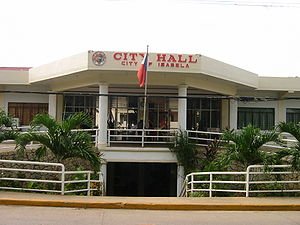
The question therefore now is: how best can we determine who amongst the local candidates has what it takes to bear with the constitutional declaration that “Public office is a public trust?” I think the most decisive starting point here is for the voter to look into the candidate’s character. Verily, when I speak of character, the same should not be limited to the examination of a candidate’s public character but private as well. Necessarily, a leader must be whole. He cannot have his public character be honest but on the other hand, have his private character be deceitful and corrupt. The core ethical values like respect, honesty, and the will to distinguish right and wrong amidst over-powering temptations inherent in public office are all ingredients of a great leader. I would like to think, and as I propose in this writing, that young candidates possess the much needed character for public office. This however does not mean that all young candidates running for public office are character-proof. In fact in my hometown Isabela City (Province of Basilan) where politics is as devious as the devil, the reverse is more likely the rule. It saddens me to know that even young candidates, people I grew up with, have not lived up to the expectations of what youthful idealism should be. Albeit there are indications of immense political awareness from the youth sector these days, thanks to the Internet by the way, the political vigor and exuberance inherent in them have not been translated locally. Sadly, the local scene still remains pretty much the same. Most young candidates have nothing but well-sounding surnames, wealth and porma as part of their credentials. Visit their Facebook accounts and see for yourself how they visualize themselves as the next Philippine president when the office they seek to land on is simply that of a city councilor. I have at least one encounter with a pompous young candidate from my hometown who postures himself as the pag-asa ng kabataan. And since he flaunted his candidacy for city council in Facebook, I could not help but asked him some relevant questions about platforms and his ideas on local statecraft. To my dismay, he simply shrugged off the questions and boasted instead his supposed achievements as a young philanthropist in terms of humanitarian and civic projects. What was he thinking? Organizing party events, sponsoring a basketball team, and sitting as a judge for a gay pageant makes him qualified to be a city councilor? Is there a reasonable connection between his purported generosity and the functions of a city councilor under the present Local Government Code? Or is he posturing as gay rights advocate once elected in the city council? Let me remind him as early as now that the august office he wishes to serve is a seat of deliberations. Questions involving his views on individual liberty and the basics of government are not misplaced because as a future local legislator he will encounter these concepts in drafting ordinances. It is best, by way of preparation, that he should browse once in a while the provisions of the Local Government Code and the 1987 Constitution for enlightenment. He could have earned my respect had his sudden itch for generosity came long before the local elections but the timing is really off and the motive is highly suspicious.

Let me integrate the term “character” with party loyalty for it is here where a young candidate either manifest signs of conviction as a future leader or the tendency to emerge as a sure-fire traditional politician someday. In my writings, I have always been critical with the multi-party system as structured under the 1987 Constitution. From the democratic vantage point, apart from the fact that it is incompatible with a presidential system, such mechanism has greatly contributed to the demise of principled politics in our country. Worse, down in the local level, political dynasties continue to gain sturdy support from their constituents who are immensely benefited by patronage politics. As a result, political families have effectively replaced political parties as key institutions in the democratic polity. Again I wish to remind the readers that political parties are essential components of a functioning democracy. Without a strong party system and in the absence of political watchdogs like the academe, we can never expect political maturity from the people especially the masses. And following the bottom-up approach I mentioned earlier, it seems that the light at the end of the tunnel remains long in sight. To be sure this is not to say that under our present system there are no respectable political parties to count on during elections. In fact, despite my own misgivings on Senator Noy Aquino running as president, I have always respected the Liberal Party for having strong and reform-oriented programs of government. But because of the multi-party system and not to mention the party-list system, political parties in our country can hardly be seen as a reliable institution to bank on in terms of principled politics. Thus, elections in this country whether national or local elections, are personality-based contest rather than an issue-oriented democratic exercise.

It is therefore an imperative for the young candidates especially in local politics to understand the rudiments of the entire system so that they may be able to assess how to effectively infuse “youthful” reforms in government. Local statecraft entails more than just noble ideals or intentions but more importantly how to implement it as well. In other words, candidates must both possess pristine motives to serve the people better and a firm grasp on the basic mechanics of government. This two should always compliment each other. It is best then to join a well-entrenched political party composed of men and women with impeccable reputation and with a solid track-record on governance. However, if you find these political parties too “political” in the sense that the people who composed it are so ruthless to hold the reins of government then by all means take the road less traveled and run as an independent candidate. And stay independent at all times. It is unfortunate that in my beloved hometown some of our young candidates for local positions seem to show early signs of political opportunism if not arrogance. As I said it is fairly within the judgment of a candidate whether to join a political party or not. But to play safe and engage in double-talk do not speak much of a promising leader coming from the ranks of the youth sector. Take this young local aspirant for example, while pledging his undying loyalty and commitment to his party he also secretly supports the ruling dynasty. Rumor has it though that this young aspirant was recently fired from the party not because of disloyalty but due to fluctuating childish behavior during sorties. Some I presume opted to run as independent candidates because they feel that most political parties do not have definite programs of government other than motherhood statements. If you are neophyte, or a perennial loser and you happen to run as an independent candidate I must say that I praise your courage not to join the circus despite the odds of running without a racehorse. However there are also those who, young as they are, have already mustered the art of cunningness at this early point of their political careers. These young vultures either run under the banner of a well organized political party or run as independent candidates but nonetheless joined the bandwagon as guest candidates. There can be no logical reason for this tactic other than wanting to play both cards safely. But surely, I don’t see any principled politics here let alone the makings of a great youth leader. In times of never-ending crises, a potential leader must always takes sides on issues that define convictions no matter what the political consequences are. There is no middle-ground in the face of a power-hungry administration, either join the opposition or stay truly independent. We have had enough of these fence-sitting trapos in the halls of government. To run as an independent candidate while at the same time appearing as a guest candidate of a potent political party will certainly mislead the voters. I challenge these young candidates who are “semi-independents” if not binabae, to bolt out from these parties as guest candidates and once and for all make a firm stand on issues that will help the voters decide intelligently. These reasons make me very skeptic to take our chances on these young politicians.

After all what has been said, the bottom line is: taking the big leap towards change and reform in our government, starts in our hands, the youth. While traditional politics may have robbed some of these youth candidates/aspirants of the innocence and pristine motives, the voting youth has a duty to ground them back to where they should be. The malfunctions in our political system while largely attributed to the players of the system, we too are partly responsible for its failures. And so this coming May 10 elections, let us start a youthful revolution by choosing the right candidates for public office. The bottom-up approach as proposed above is designed to push the youth sector to take the lead on matters of governance. Again if we want meaningful reforms, change must come from the outside not from within the present political system. Simply, these new breed of politicians must not keep abreast with the old and traditional “public servants.” They, as youth, must recreate, reform, if not give breath to a genuine new breed, unbitten by the dangerous bug that brought our country into malady.

Friday, February 26, 2010

Villar and Aquino: Slogging through campaign slogans

In this frenzied political season, all eyes are focused on the presidential candidates hoping that maybe, just maybe, one of them could be the messiah we all have been waiting for. Once again the masses are hypnotized by means of silly and trite campaign promises like extirpation of poverty, peace in Mindanao, eradication of graft and corruption and a lot more, name it and they could readily unleash answers that would solve our country’s plight. Yes, all of these, as they would like us to believe, can be done in just a matter of six years. What a crap! What an insult, an affront to our collective intelligence as particles of sovereignty.

Philippine politics as we all know revolves around personalities and not platforms, principles or programs of government. Because political parties are often seen as “ideologically” bankrupt democratic entities, most Filipinos vote for individuals not parties, or at the very least, the principles they represent as democratic organizations. The propensity of politicos to jump from one party to another throughout the political season clearly enhances popular disgust on the political system. Logically speaking, the seismic crack in our political system has a direct link why political dynasties and incompetent movie personalities thrive in the halls of public offices.

From this perspective, no wonder most presidential contenders are so obsessed in creating their own myths by flaunting their faces on prime time television, reinforced with profound campaign slogans which represent the issues of the day. Amongst the favorite “gasgas” themes of tradpols is the perennial problem of poverty. While poverty is a legitimate social issue of Third World democracies, sad to say that it is also in fact an effective political issue during election season. Thus, poverty being the ultimate source of the ills and inequality in our society, still remains to this day, the most exploited theme for candidates aspiring to sit in public office. Unless poverty is lessened through meaningful social reforms, populist platforms will always be the favorite campaign strategy to bank on during elections. For obvious reason, politicos readily embarked on populist theme because it aims to touch the hearts of the underprivileged segment of the electorate which by experience, determines the “winnability” of a candidate.

In the 1998 presidential elections, Erap played his cards well in convincing the masses to choose one of their own to seat in Malacanang. Anchoring mainly on a populist platform expressed in his slogan, “Erap para sa mahirap,” he was eventually elected “overwhelmingly” as the 13th President of the Republic. Erap being a “mahirap” is of course a brazen lie. Nonetheless, his campaign strategy worked well knowing for a fact that he had the upper hand in terms of mass appeal and popularity. Undoubtedly, by portraying roles such as the defender of the underdogs in the big screen, no one dared to examine his checkered past nor question the truthfulness, the exaggeration inherent in his claims as the purported champion of the poor. Conversely, the late Senator Raul Roco with all his sterling credentials, tested and unwavering commitment to principled politics finished fourth in that electoral contest for the presidency.

Today as it was before, the issue of poverty appears to be the trend for an effective campaign strategy. The most vocal and by far credible of all presidential contenders is Nacionalista Party standard bearer Manny Villar. The problem however with Villar, unlike Erap in the ’98 elections, he has no star quality to rely on. And so whatever it takes, he needs to play the “poverty card” with utmost precision. We all know his side of the story. His television campaign ads coupled with a catchy campaign jingle speak for themselves. In the end, he proposes a one-liner solution to eradicate poverty, “Sipag at Tiyaga.” Thus, as of this writing, Villar was reported to have spent a billion for his campaign, the highest so far amongst other presidential candidates. This is expected of Villar because preparation-wise, both financially and emotionally perhaps, he is the most determined to conquer the seat of power at any cost. What worries me, and I’m sure hundreds of Filipinos too share the same trepidation, is the many IOUs (I owe you) he may have incurred as a result of profligate campaign spending. Indeed politics in our country has become too expensive which only the well entrenched oligarch could afford.

If Villar’s campaign battle cry is profound and simple, Liberal Party contender Senator Noynoy Aquino, his closest rival in the surveys, has a family-oriented campaign slogan, “Mama at Papa.” This of course is not intended to belittle Aquino’s intentions but I’m merely stating the obvious. The decision of Noy Aquino after all, came as a surprise to everyone. Almost like a thief in the night, he stole the ambitions of Senator Mar Roxas to become Liberal’s standard bearer. As I have mentioned before, the perceived clamor urging Aquino to run for the presidency was merely an offshoot of Cory Aquino’s celebrated funeral. Being the symbol of the EDSA revolution, the death of the former president brought back a lot of emotions for our people. It rekindled our sense of nationhood through shared suffering in the face of a perceived indestructible despotic regime. Then suddenly, the spotlight was focused on Noy Aquino, the progeny of Ninoy and Cory, among the heroes of the EDSA revolution.

Critics both pros and cons, were quick to express their opinions. Some praised Senator Noy Aquino’s courage to take up the challenge while others expressed doubts because of his dismal performance as a legislator. The think-tanks of the Liberal Party panicked and chose to exploit the spirit of EDSA to patch up Aquino’s supposed weaknesses and lack of solid track record. Lately, Aquino and those behind his strategy opted to invest more on “character” issues which make all the more suspicious that he has nothing to offer except his family name. Surprisingly during the 1986 snap election, Cory Aquino too did the same thing when President Marcos questioned her lack of experience for the presidency. But how can we be so sure of Aquino’s character if I may ask. I barely saw him articulating his views on controversial issues during his stint as legislator. When asked about his obscure legislative track record all he could offer was that he devoted much of his time as a legislator by attending legislative investigations. Kudos then for the good Senator! But what Noy Aquino seemed to forget is the fact that legislative inquiries serve only as an aid for legislation. Simply put, legislative hearings are incidental to primary function of Congress that is, to pass laws. Very well then if so, what landmark legislation did the good Senator pass during his term as a Congressman and later a Senator of the republic? How convenient it is to deceive the public especially when majority of our people are unfamiliar with the rudiments of government and its institutions.

I think character, as a necessary ingredient of leadership, should be measured conclusively when it is being put into severe test of will power and convictions in times of insurmountable crises. In the august words of a patriot, “Seldom is a leader remembered for what he said during a crisis. He is often remembered for what he did.” Unfortunately for Aquino, we seldom see both. As a legislator, he chose to be part of the “silent minority” bloc which clearly shows his unpreparedness to become the next president of our country.

It is for these reasons that I urge the academe to take an active part in overhauling the mind-set of our people, the masses in particular when it comes to political education. Civil society organizations can only do so much. More often, they too are being utilized by moneyed and highly influential politicos to set the trend of discussion which would fit their own purported advocacies. Corruption indeed touches everything. Today, albeit more and more people engage in participatory democracy, still we have to work harder in bringing the discussion down to the uneducated masses. If we want to change the system, or at least neutralize traditional politics, we have to consider the bottom-up approach in dealing with the problem. As they say, all politics is local.

Campaign slogans no matter how distasteful, at times funny, depict the kind of politics we have in this country: perpetual exploitation of the masses by allegedly joining the poverty bandwagon. Therefore, the next president of this nation should not be solely gauged with whether you believe in Sipag at Tiyaga or you have high regards for “Mama at Papa,” rather, he should and must be measured based on his platforms and deep-seated moral principles that will enable him to defy temptations of the supposed grandeur of a public office. In the end, it is not afterall choosing between, Sipag at Tiyaga or Mama at Papa, it is choosing for our “Bayang Pilipinas.”

Next time I would be dealing with LAKAS’ standard bearer Gilbert “Gibo” Teodoro and BAGUMBAYAN’s Richard “Dick” Gordon.